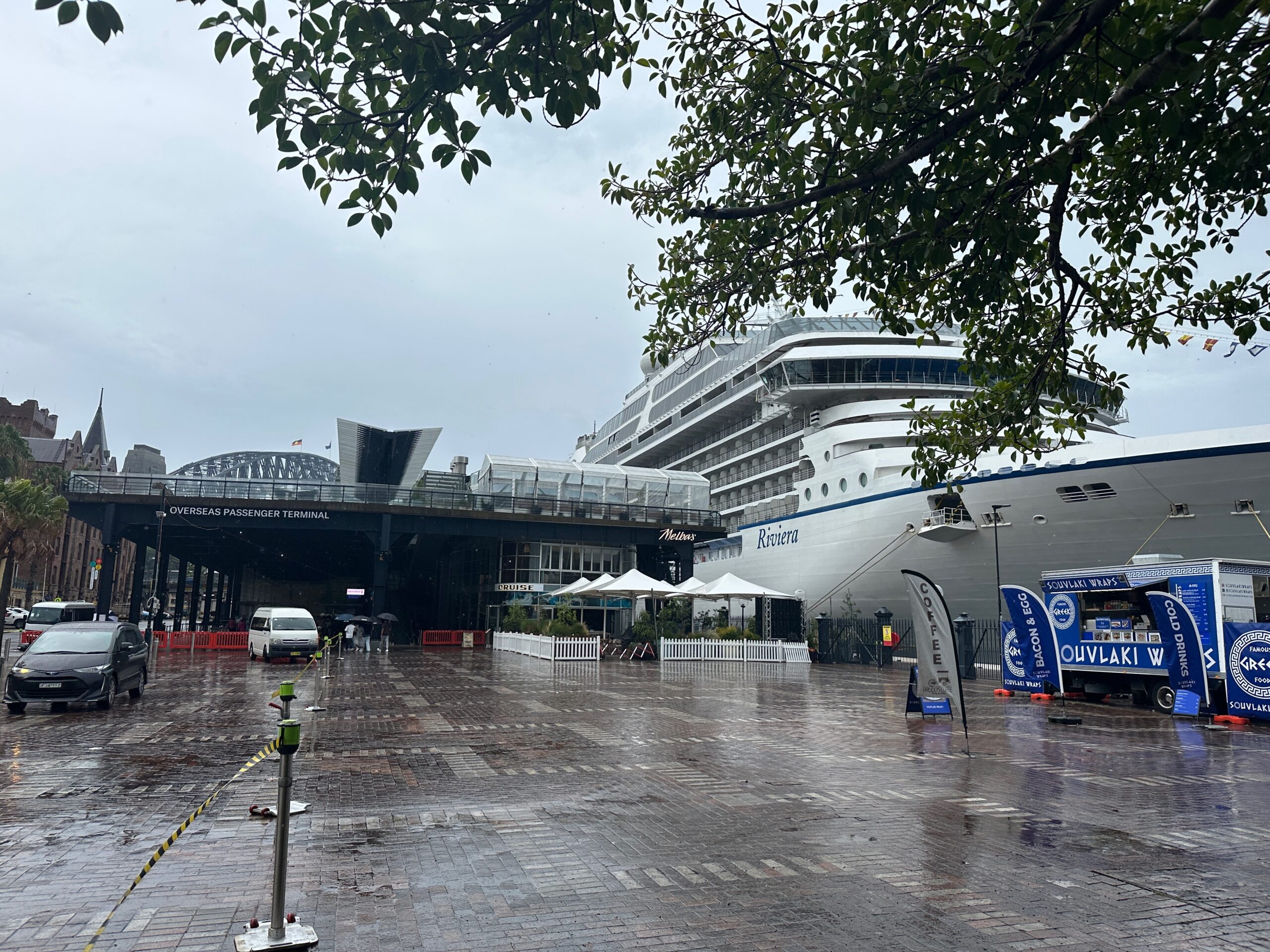
I checked out of the hotel at 11 am (an hour later than the normal checkout time). Today was the first day it rained while I’ve been in Sydney. It’s been drizzling all morning and ended up drizzling until shortly before we left Sydney.
I took a taxi to the Oversees Passengers Terminal back in Circular Quay (where I’ve been a number of times while in Sydney). It was quick and easy to drop off my luggage at the terminal. I dropped it off since it will be a couple of hours before I can board the ship and it was way too heavy to carry and move around. The Museum of Contemporary Art Australia was a few steps away so I went back to spend more time at the “Data, Dreams, Art and AI” exhibit. Jennifer joined me shortly after I got to the exhibit. We spent about an hour and then went back to the cruise terminal to check in to our cruise.
Some thought provoking questions from signs in the “Data, Dreams, Art and AI” exhibit:
- Artificial intelligence is physical. It runs on data centers, electricity, water for cooling and minerals mined from the ground. Training large AI models and generating media at scale consumes significant resources. Devices also have life cycles of extraction, manufacture and disposal. Who bears the environmental risks, and who benefits from the convenience?
- Thinking about AI ecologically means tracing connections – between server farms and rivers, batteries and mines, code, workers and climate. How might we design and use these systems differently if the energy and materials they use were more visible? What counts as a meaningful image or output when each has an environmental footprint?
- Chemical Garden<a piece of art> is based on the emergence of plant-like forms out of inorganic chemicals: metal salts. These metals – the same ones that are currently used to produce computers, the industrial extraction of which causes entire ecosystems to collapse – were the elements that were necessary for the inception of life on Earth…. The fact that these plant-like forms emerge from the interactions of molecules of these otherwise destructive metals displays the complexity of processes in the world and the blurring of the boundary between life and non-life, between real and synthetic, natural and artificial.
Boarding the Oceania Riviera ship was quick but did involve some walking back and forth between and through the stations(verify passport, check in, security and drop off the passport, walk up the gangway). They were setup to have lots of people but there weren’t too many when we went through.
We helped ourselves to the welcome champagne and then found a spot to have a bite to eat.
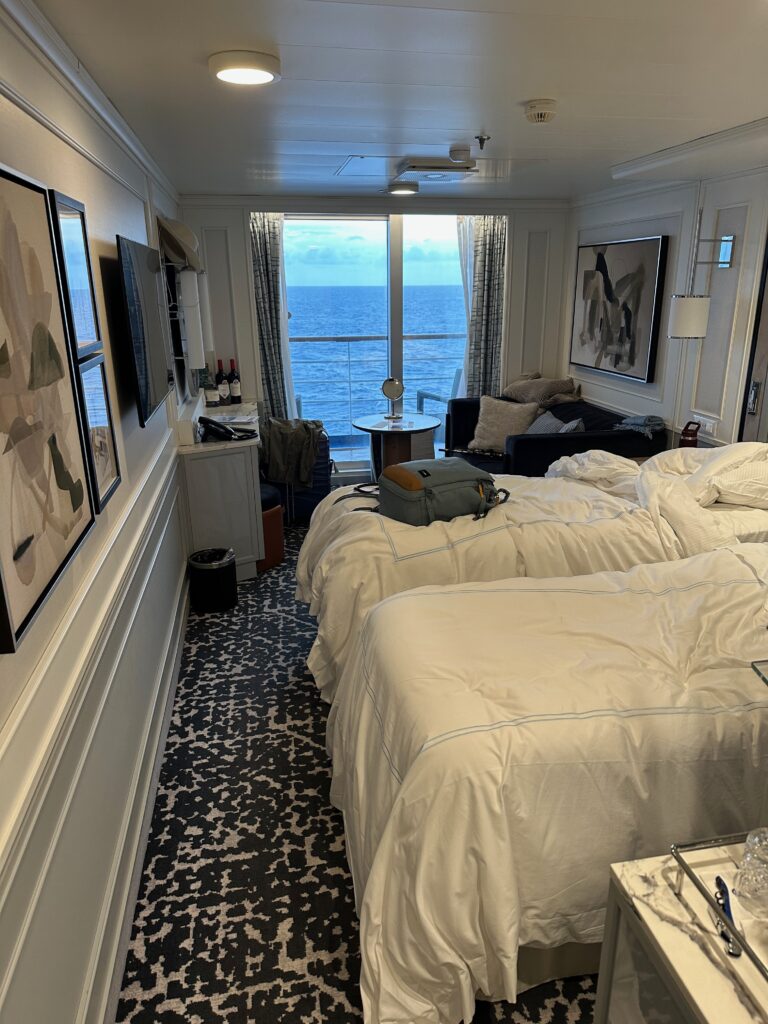
Our room was ready shortly thereafter and all our luggage arrived. We didn’t unpack yet as they need to change the bed- it was setup as one big bed but we want two twin beds.
We explored the ship and entered the spa raffle but didn’t win and then had dinner at Jacques, a specialty dining room that isn’t normally available on the night passengers embark. The ship left port about 8pm while we were having dinner.
After dinner it was time for bed- we’ll unpack tomorrow!